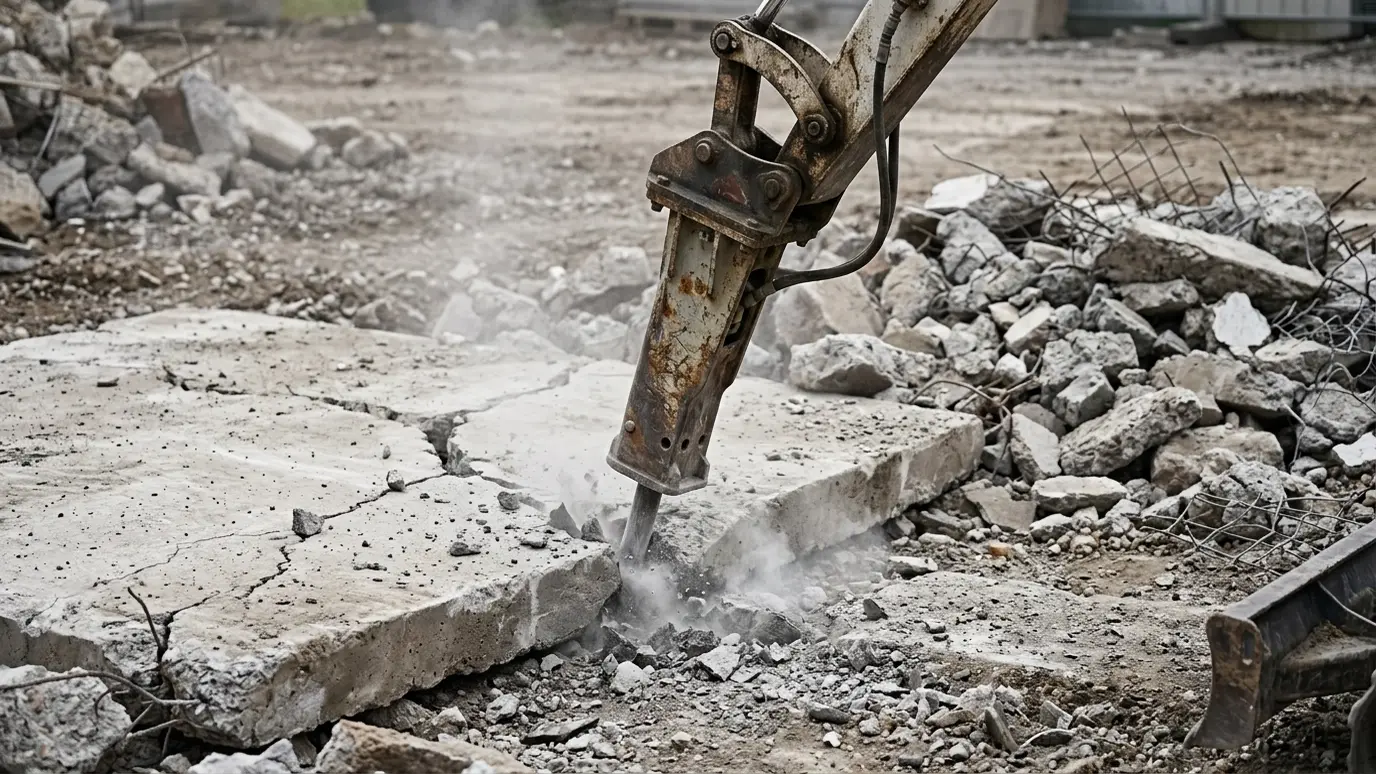
Why recycle demolition debris
Most of a building is reusable material. Recycling keeps it out of landfills, lowers disposal fees and sometimes returns scrap credit.
Some projects require diversion reports.
Concrete, brick and asphalt
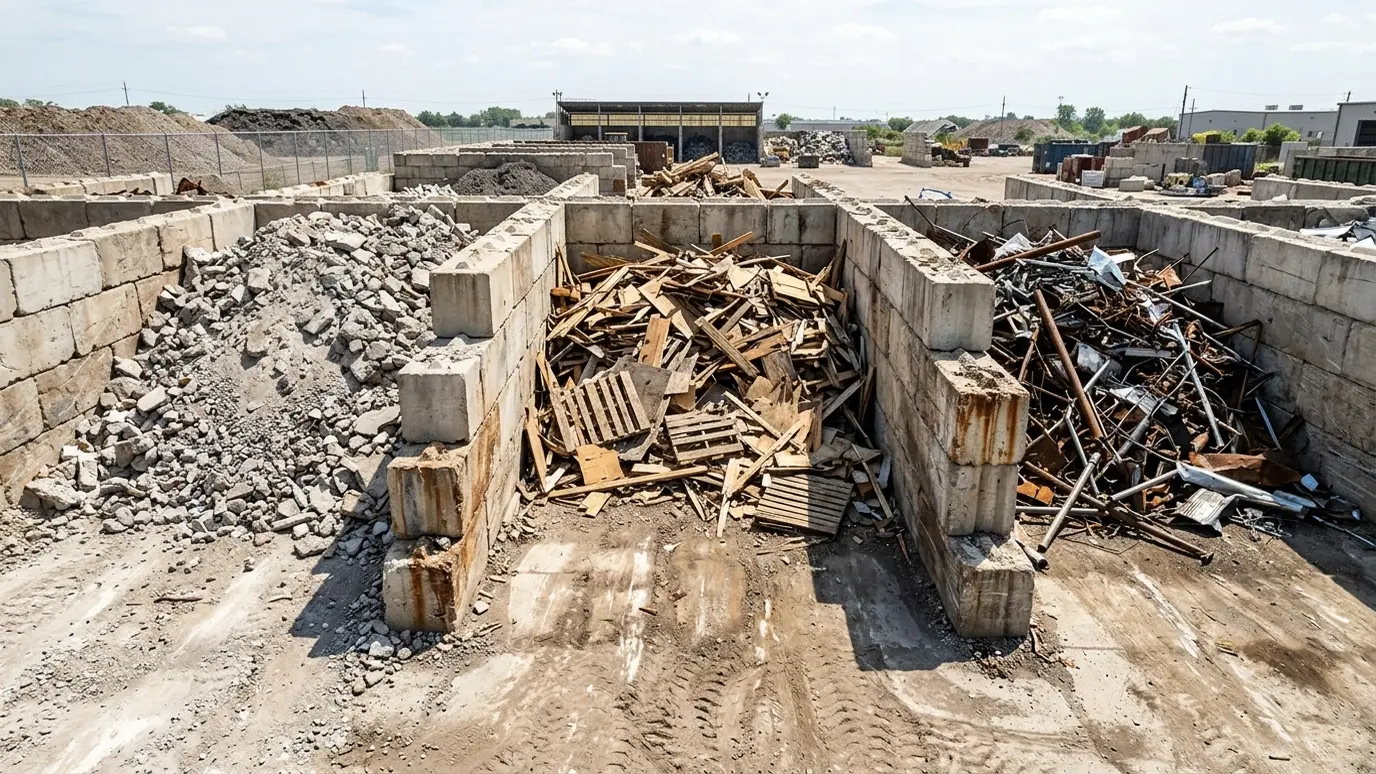
These heavy materials are crushed into base and fill. Clean loads are accepted at lower fees than mixed loads.
Dirt and trash raise the price.
Metal
Steel, copper, aluminum and appliances have scrap value, which can offset part of the project cost.
Sorting by type brings the best price.
Wood
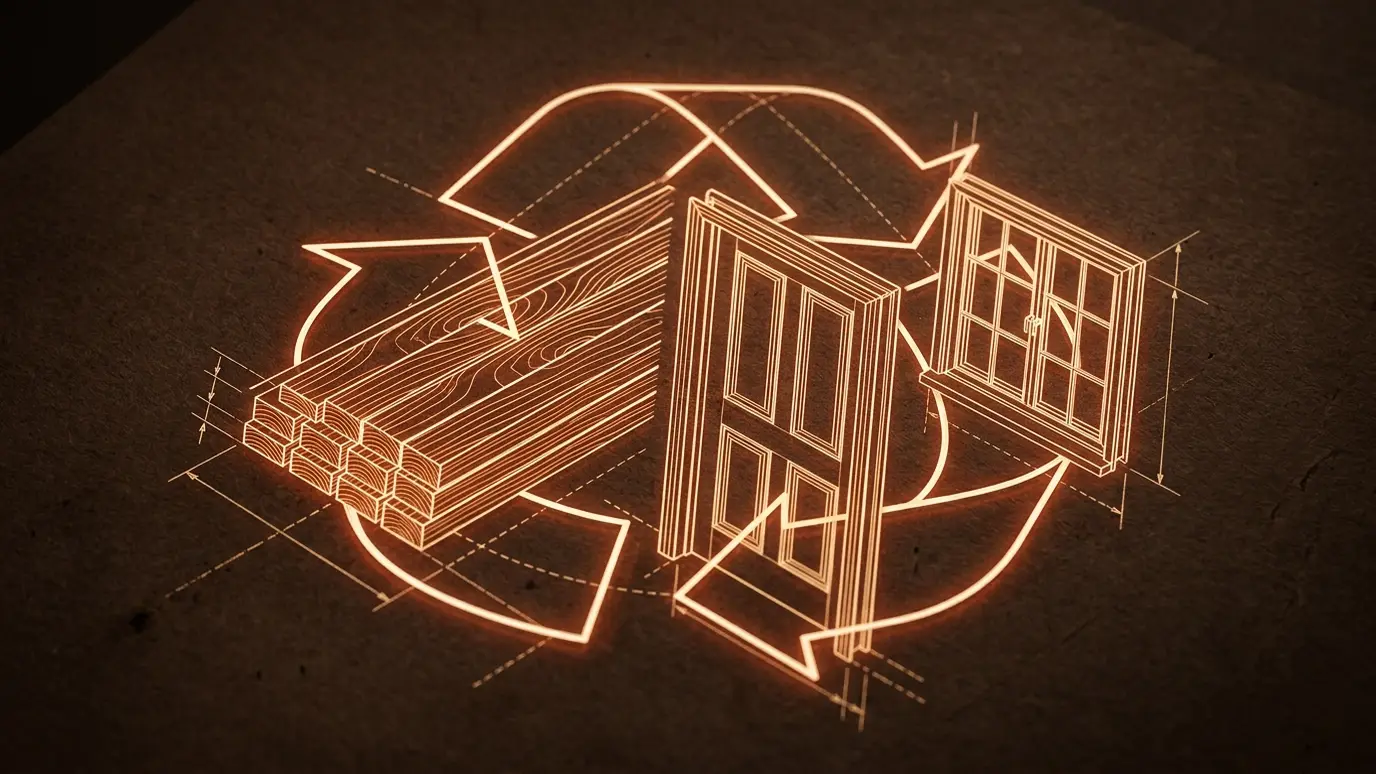
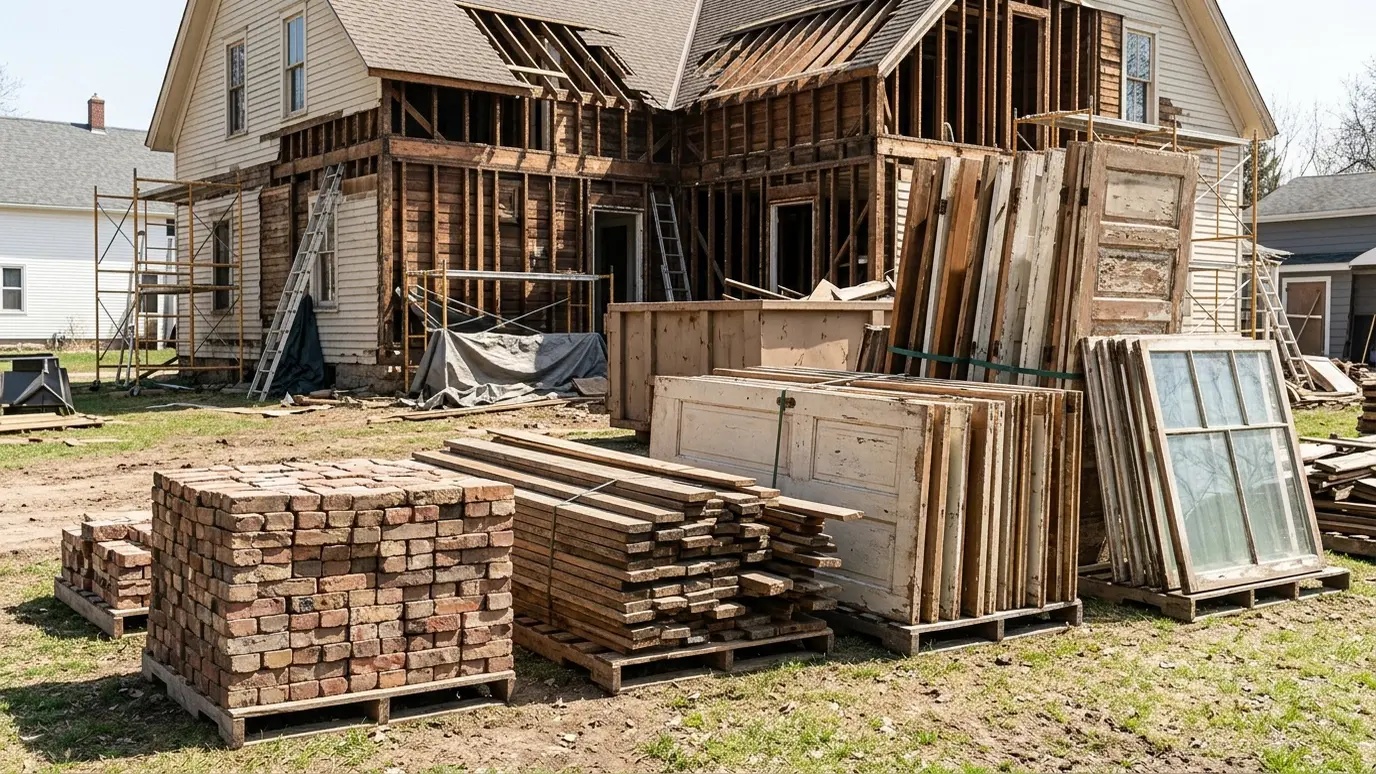
Clean framing and pallet wood can be chipped or reused. Painted, rotted and treated wood usually goes to disposal.
Salvage-quality wood may be sold.
What is hard to recycle
Mixed debris, drywall in some areas, insulation, composite materials and contaminated items usually go to the landfill.
Sorting early reduces how much ends up there.
How sorting works
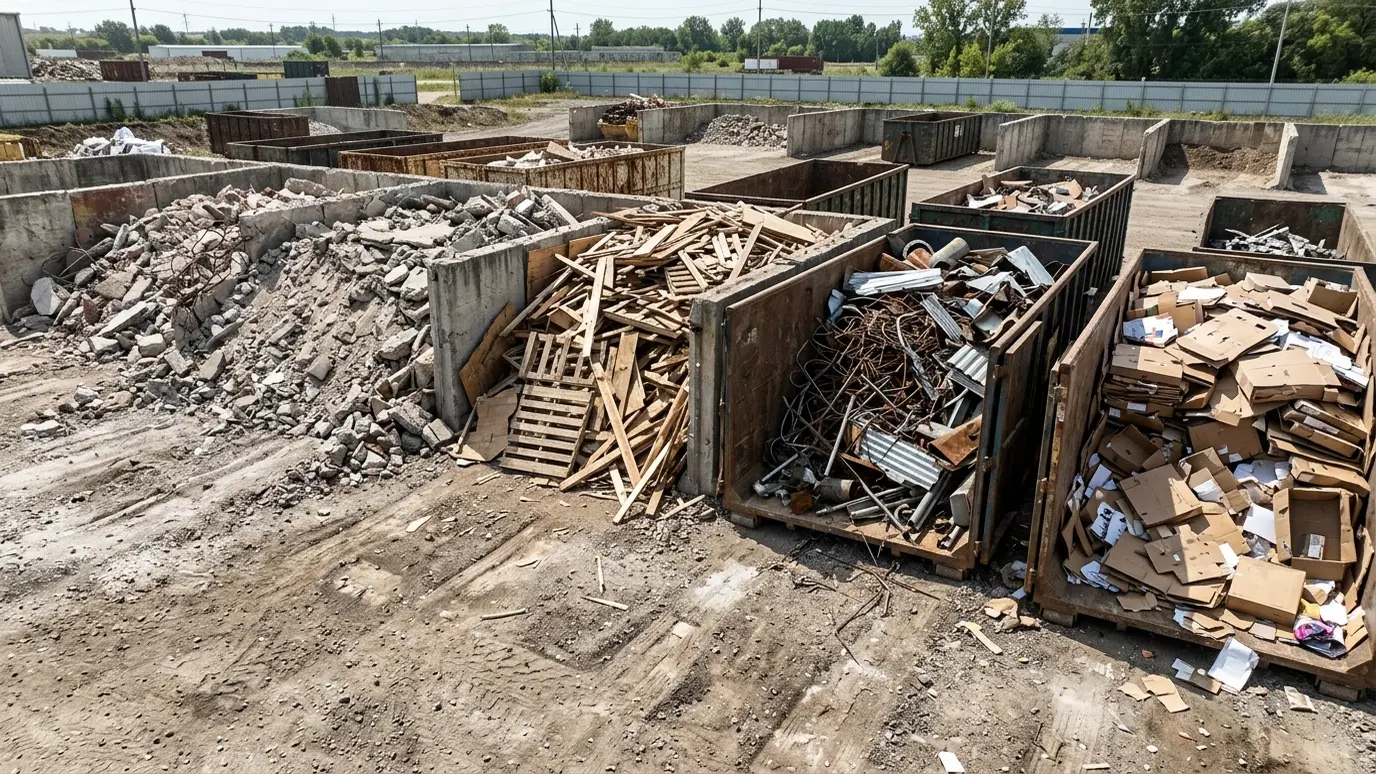
Separate piles or containers at the source keep materials clean. Weight tickets document where each load went.
We handle the sorting so you do not have to.
Sort at the source, keep loads clean and ask for weight tickets and a diversion summary.