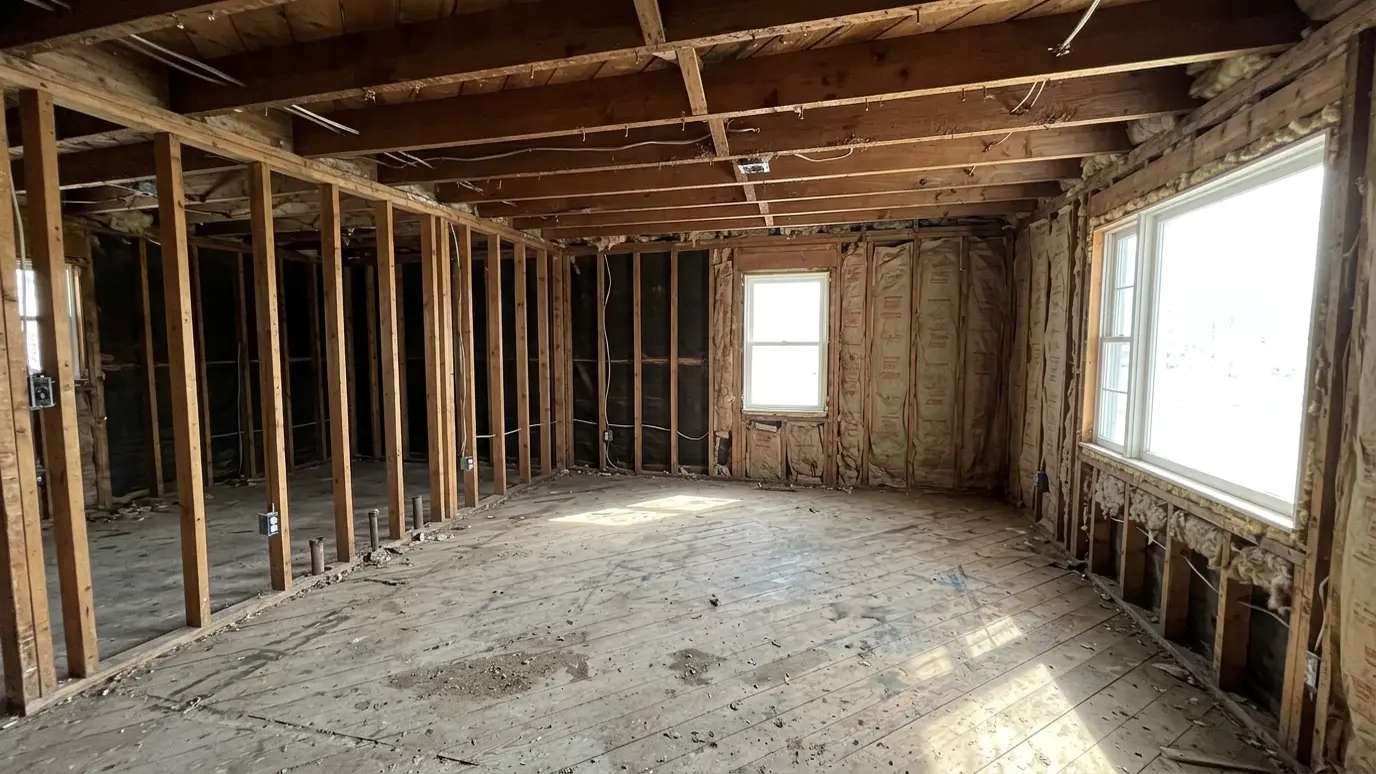
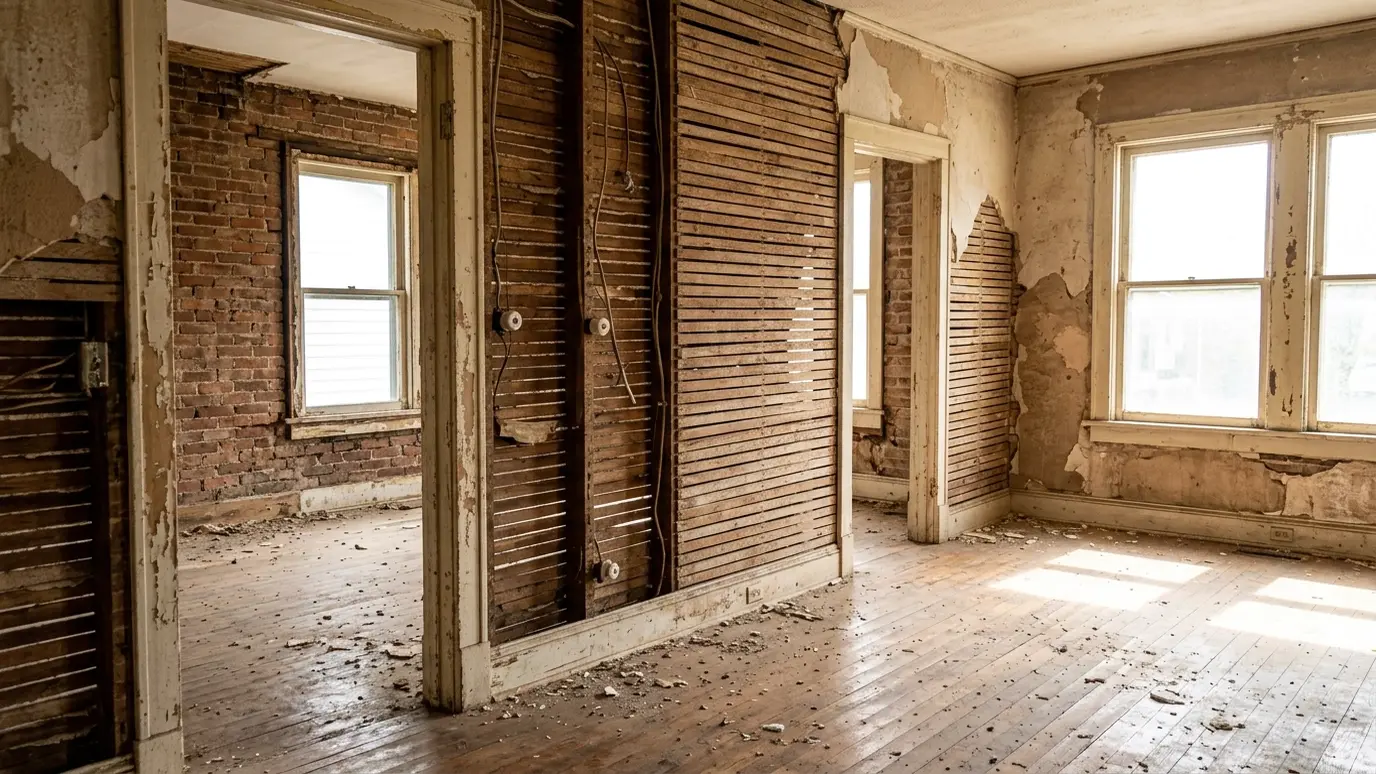
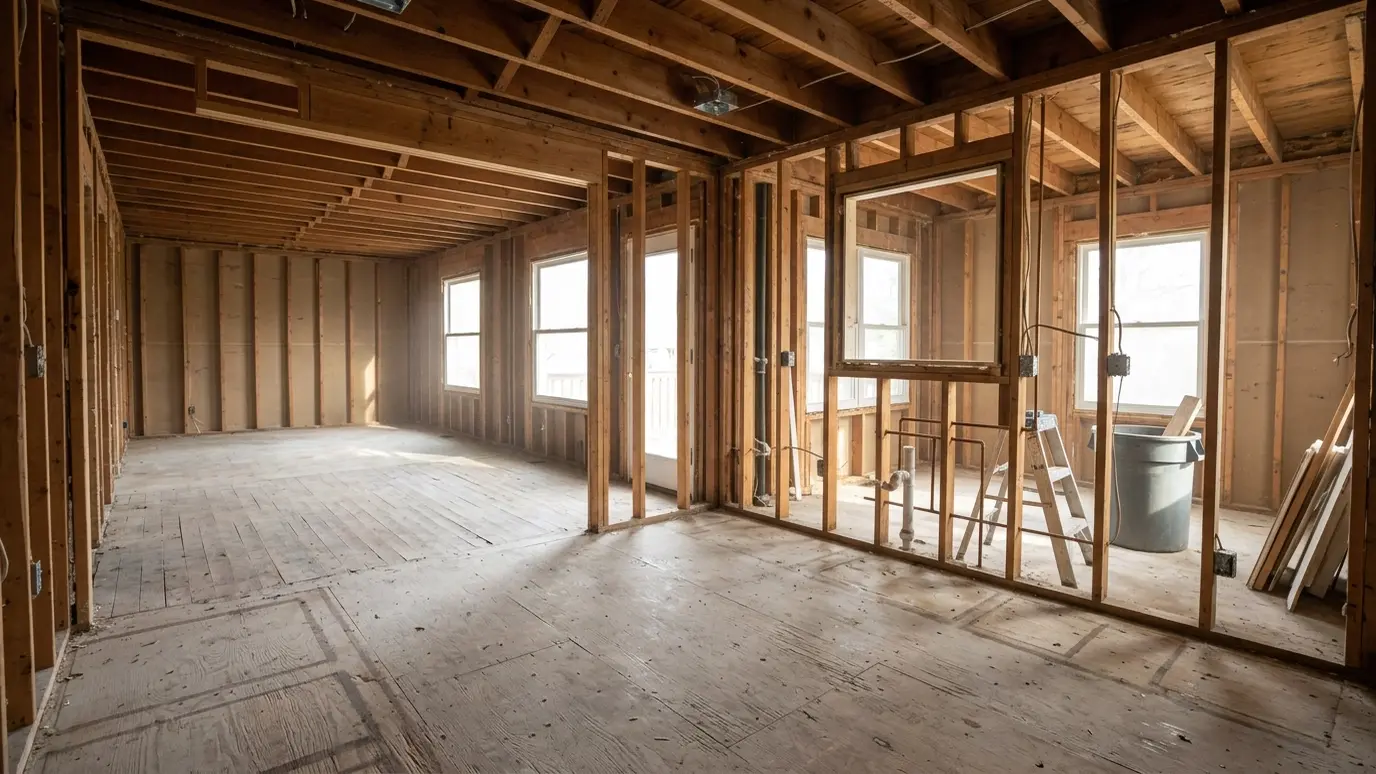
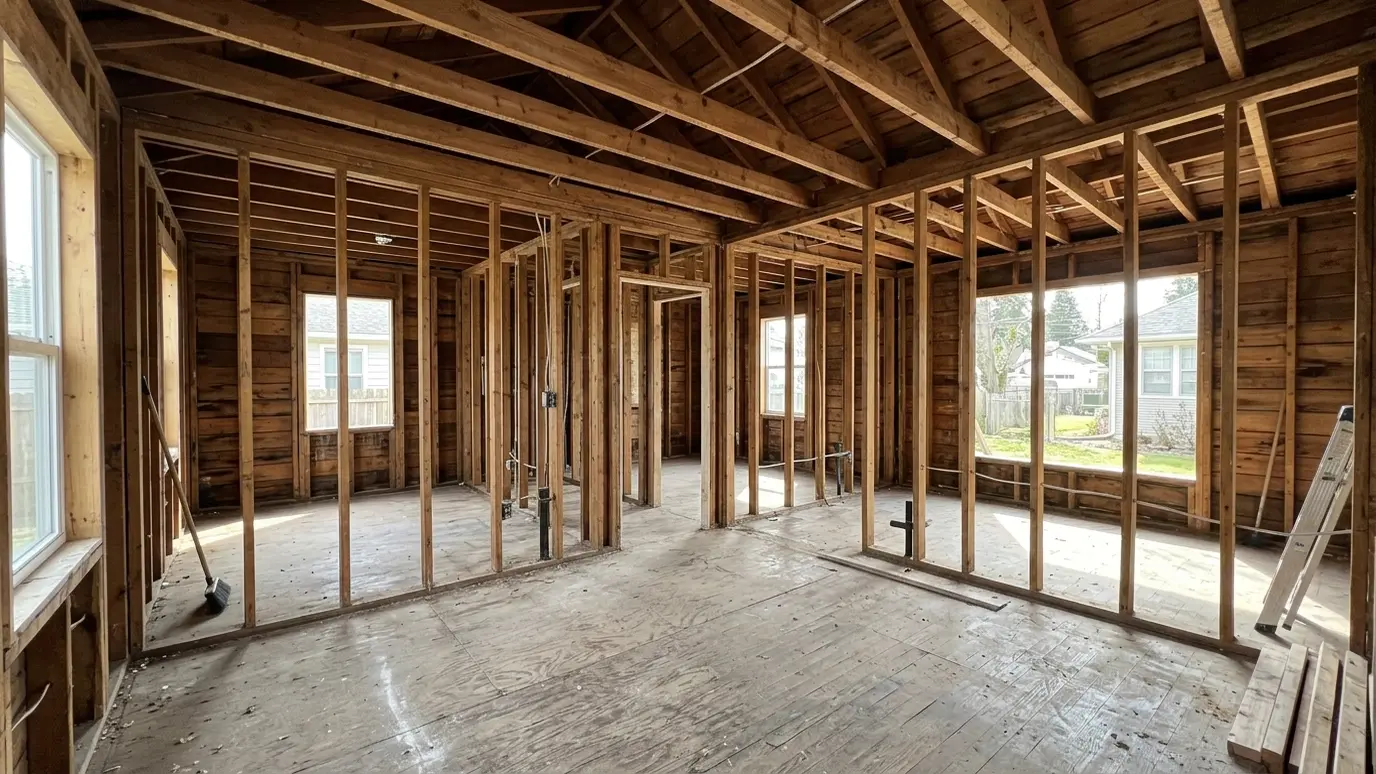
Old drywall, plaster and lath removed from walls and ceilings with dust control, leaving clean studs and joists.
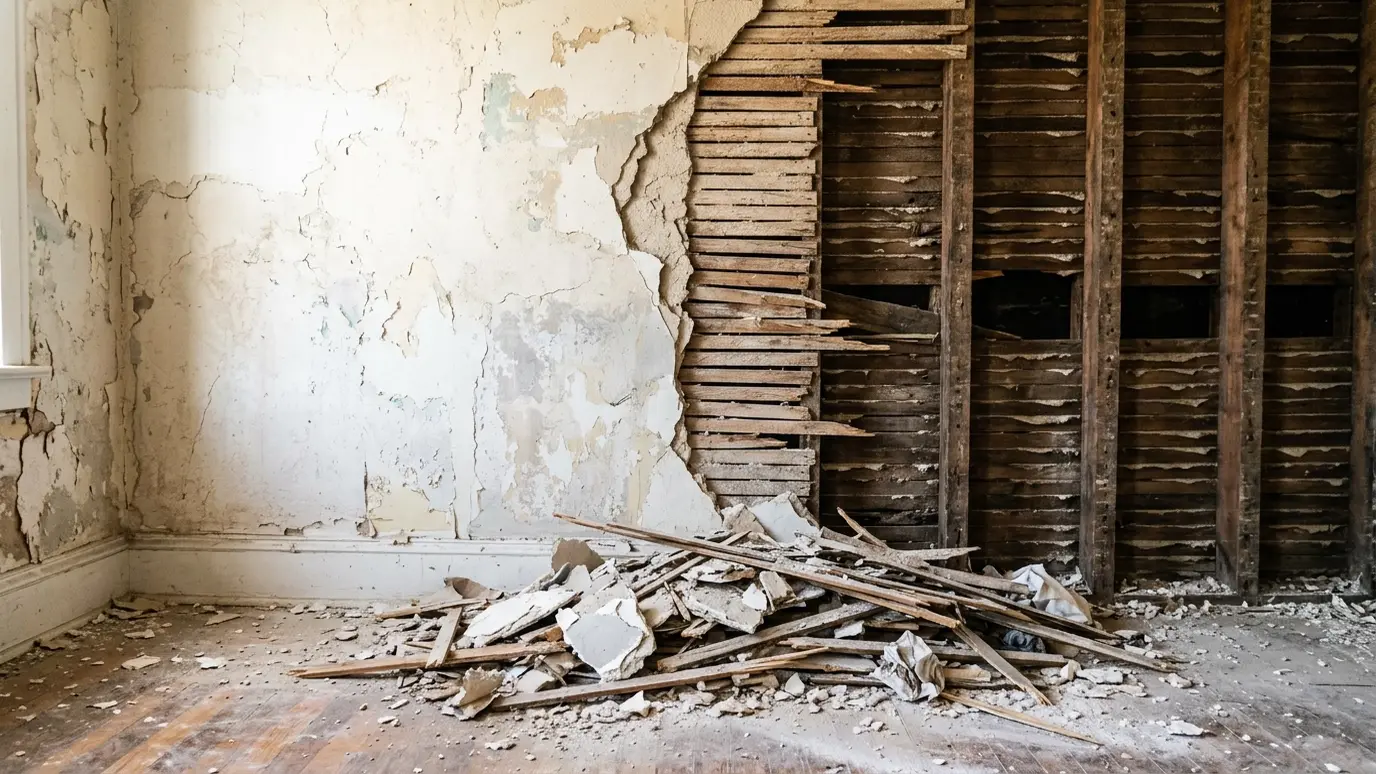
Drywall comes down fast, but plaster and lath is a different job. Plaster is heavy, hard and dusty, lath is nailed into every stud and old walls may hold insulation, wiring and surprises behind them. Either way, the goal is clean framing and a house that is not covered in dust.
We seal off the work area, protect floors, remove drywall in sheets where we can and take plaster and lath down in controlled sections. We pull nails and staples from the framing, bag the debris and haul it away, and we leave the space swept and ready for new wiring, insulation and drywall.
Drywall comes off in panels and mostly makes dust at the seams. Plaster and lath comes down in heavy chunks with a lot of fine dust and a lot of weight, so it needs more containment and more hauling.
Plastic barriers, covered vents and wet methods keep dust in the work area. Clean air in the rest of the house is worth the setup time.
Plaster, joint compound, paint and texture in older homes may contain asbestos or lead. We recommend testing before demolition and follow the results.
Nails, staples and screws pulled from studs and joists mean a flat surface for new drywall and a safer space for the next trades.
Drag the handle to compare.
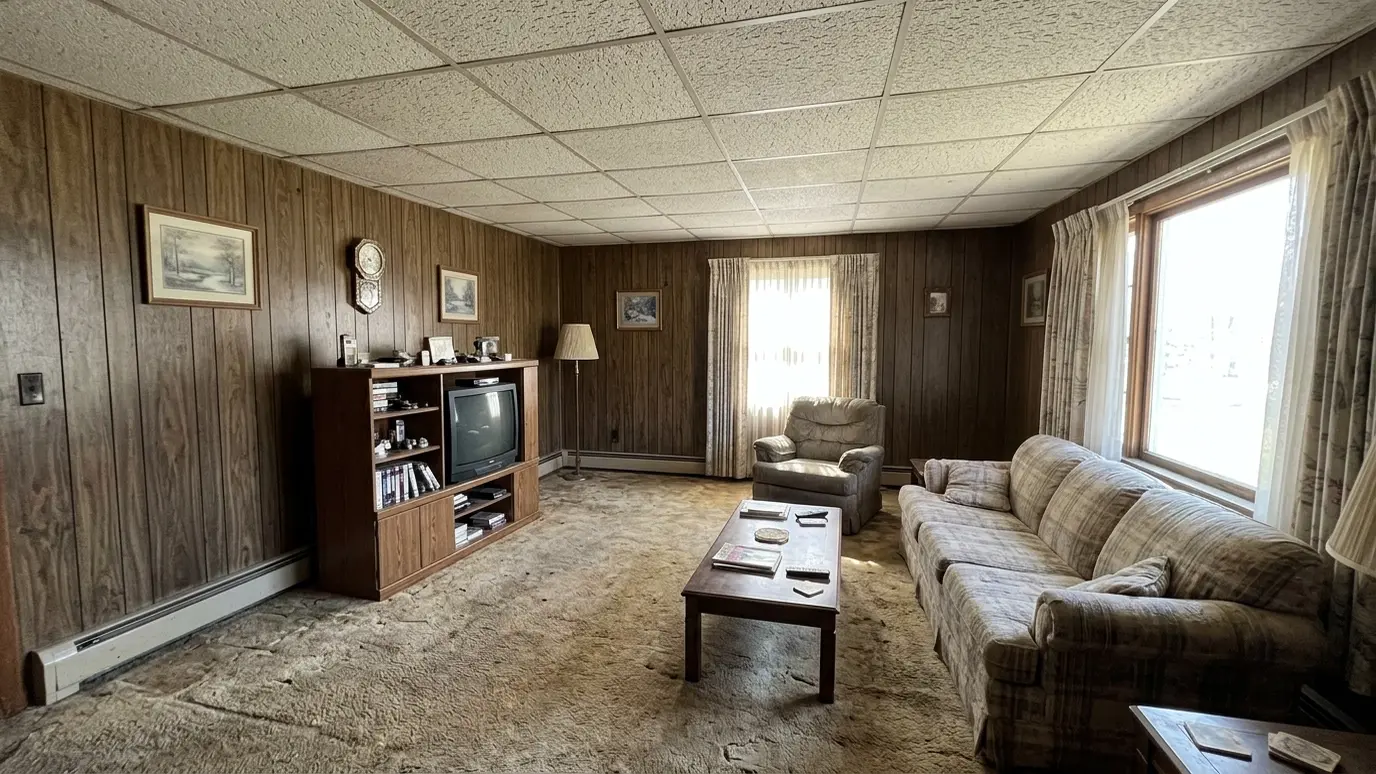 BeforeAfter
Both removed to bare framing.
Barriers and sealed vents.
Testing recommended for older materials.
Studs and joists left clean.
Plaster weight planned for.
Easy for wiring and insulation.
Every topic has its own page with what to expect and how we approach it.
 Project situationOlder HomesOlder homes hide plaster, lath, old wiring and sometimes hazardous materials. Here is how to take them apart…Learn more
 Project situationRemodel PrepEvery remodel starts with demolition. Here is how to plan the tear-out so the rebuild starts clean, on…Learn more
 Project situationRental PropertiesInvestors and landlords need fast, fair, well-documented demolition to turn over, renovate or clear properties.Learn more
Pick the project and size to see the debris in cubic yards, the tons and the dumpsters or truckloads to plan for.
You tell us about the project, the timeline and any concerns, and we set a time to visit that fits your day.
We walk the structure and the lot, check access, utilities and likely hazards and take photos and measurements.
We prepare the written scope, coordinate permits, surveys and utility disconnects and set up fencing and dust control.
The work proceeds in a planned order with water on dust and materials sorted for recycling.
Debris is loaded and hauled away on schedule, and the site is swept and kept tidy.
We grade the lot, sweep for nails and debris, take photos and walk the finished work with you.
It usually takes more time and creates more weight and dust, so it costs more per room. We explain the difference in the scope.
We can remove old insulation behind the walls, and we recommend testing first if the home is old or the material looks unusual.
We seal the work area with plastic, cover vents and clean as we go, so dust stays where the work is.
Yes. We can cut out sections for repairs or openings and leave the rest in place.
In older homes, yes. Testing is a small step that protects your family and your crew.
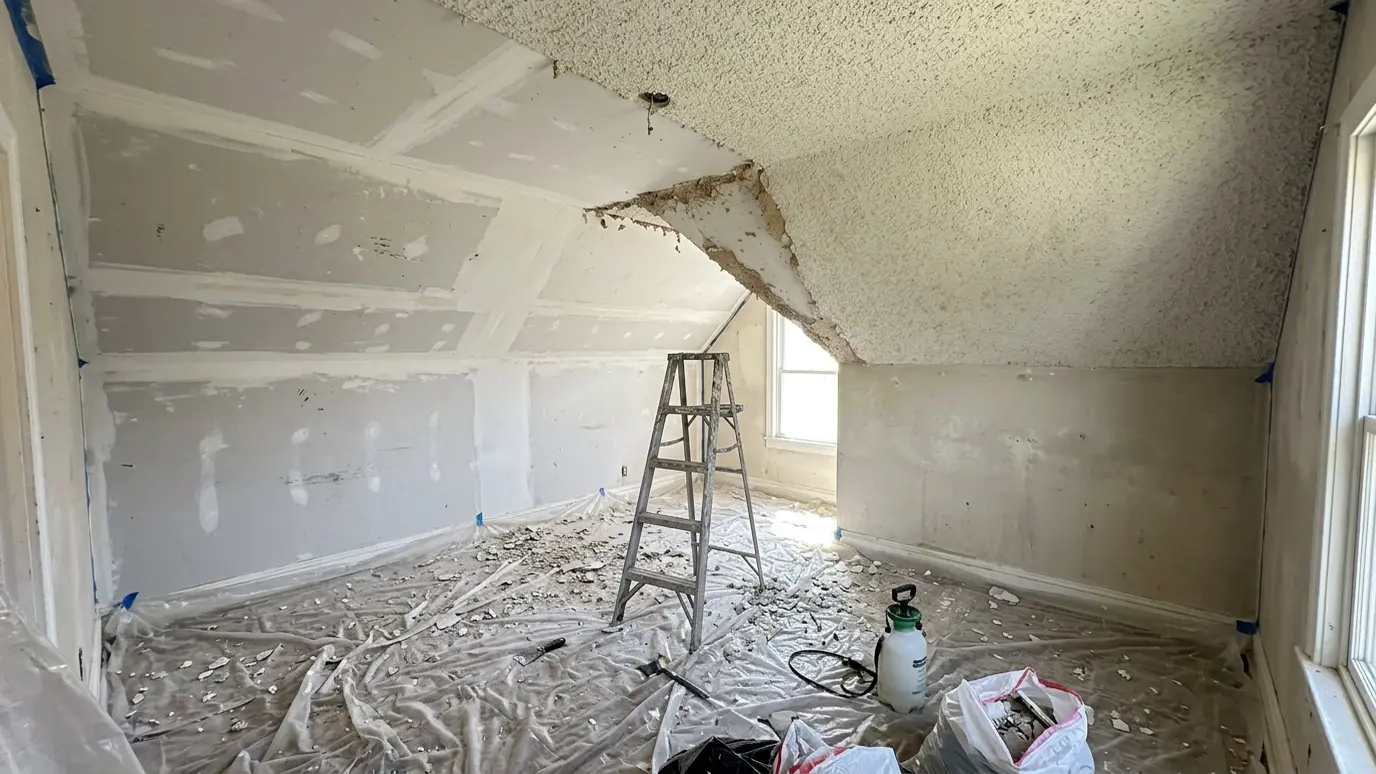 Ceiling and Popcorn CeilingTextured popcorn ceilings scraped and old ceilings removed, with plastic protection and a clean, smooth start for new…Explore
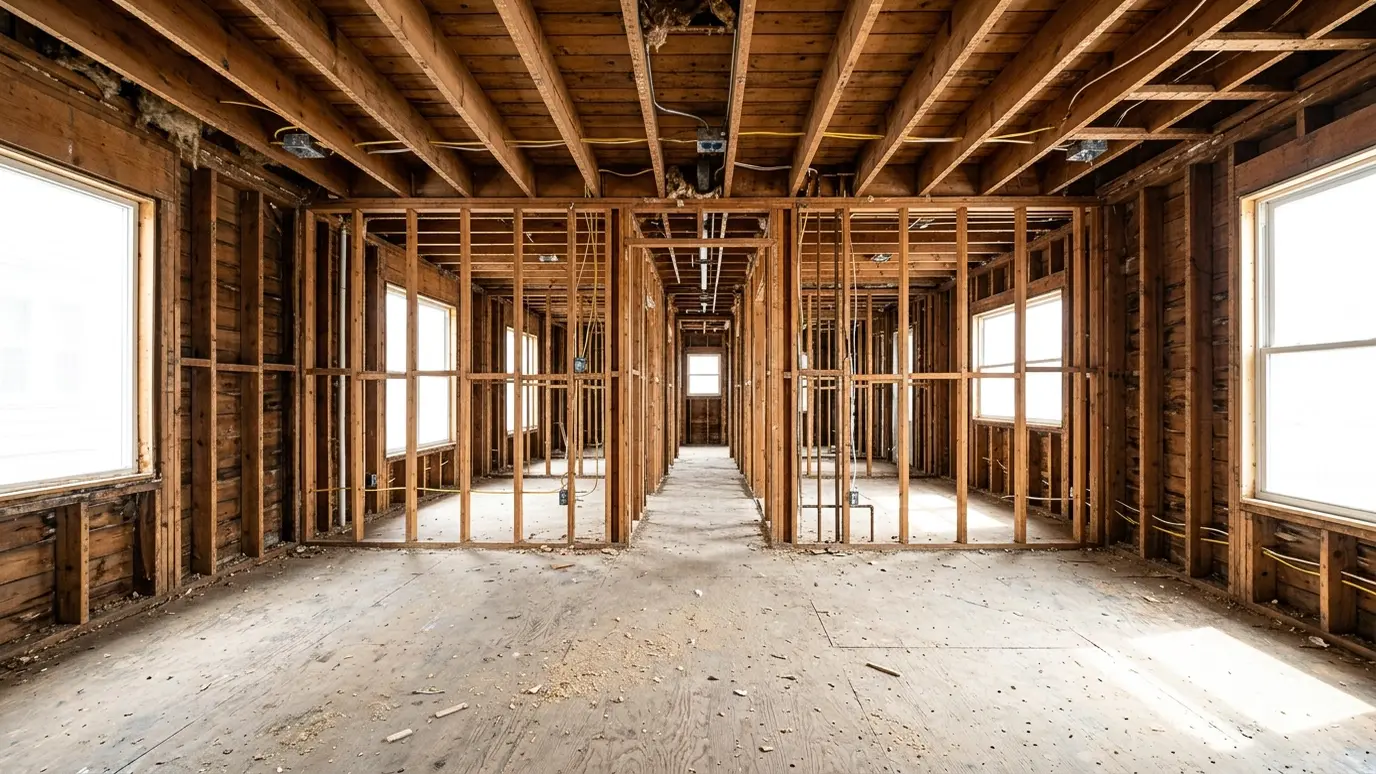 Whole-Home Interior GutEvery room taken back to the studs and joists, with the structure protected and a clean, open shell…Explore
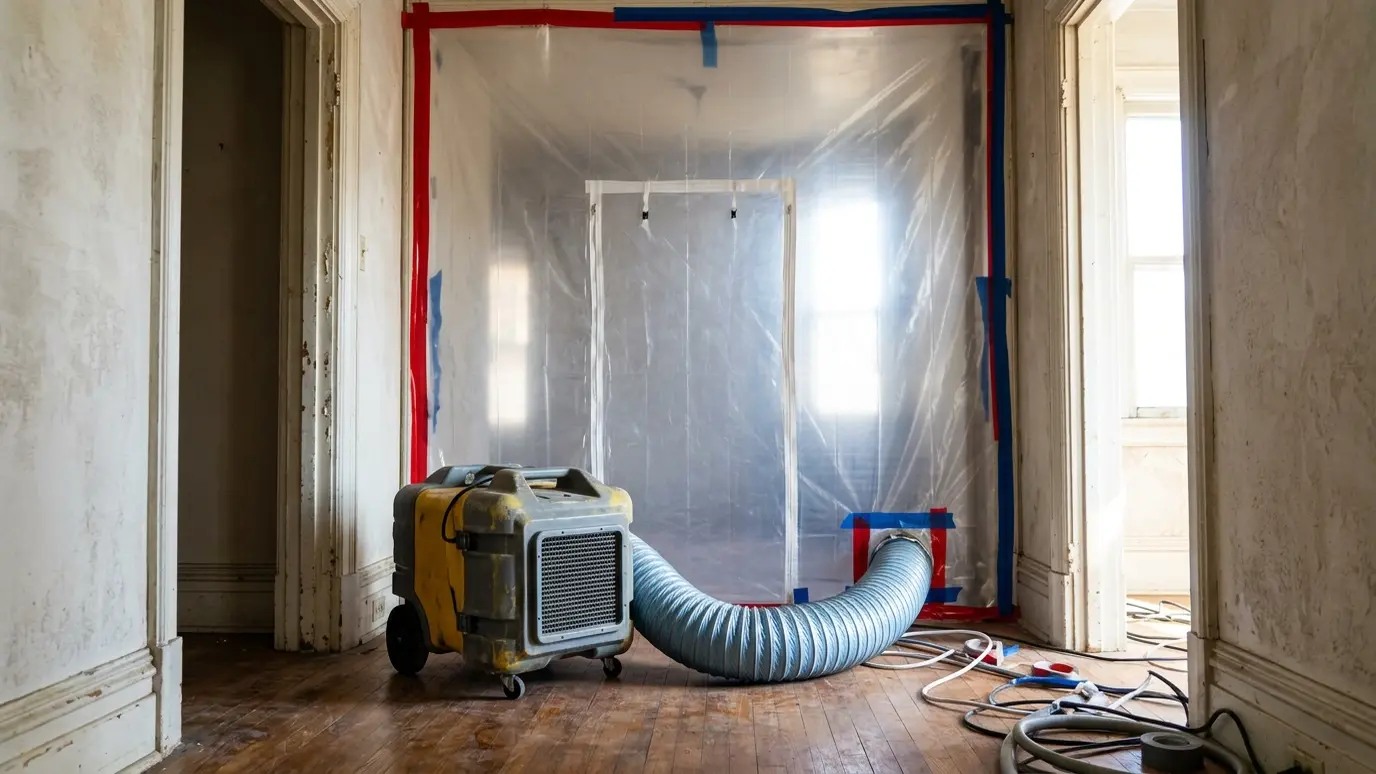 Hazmat Survey and Abatement CoordinationTesting and abatement of asbestos, lead and other hazards arranged with qualified specialists before demolition begins.Explore
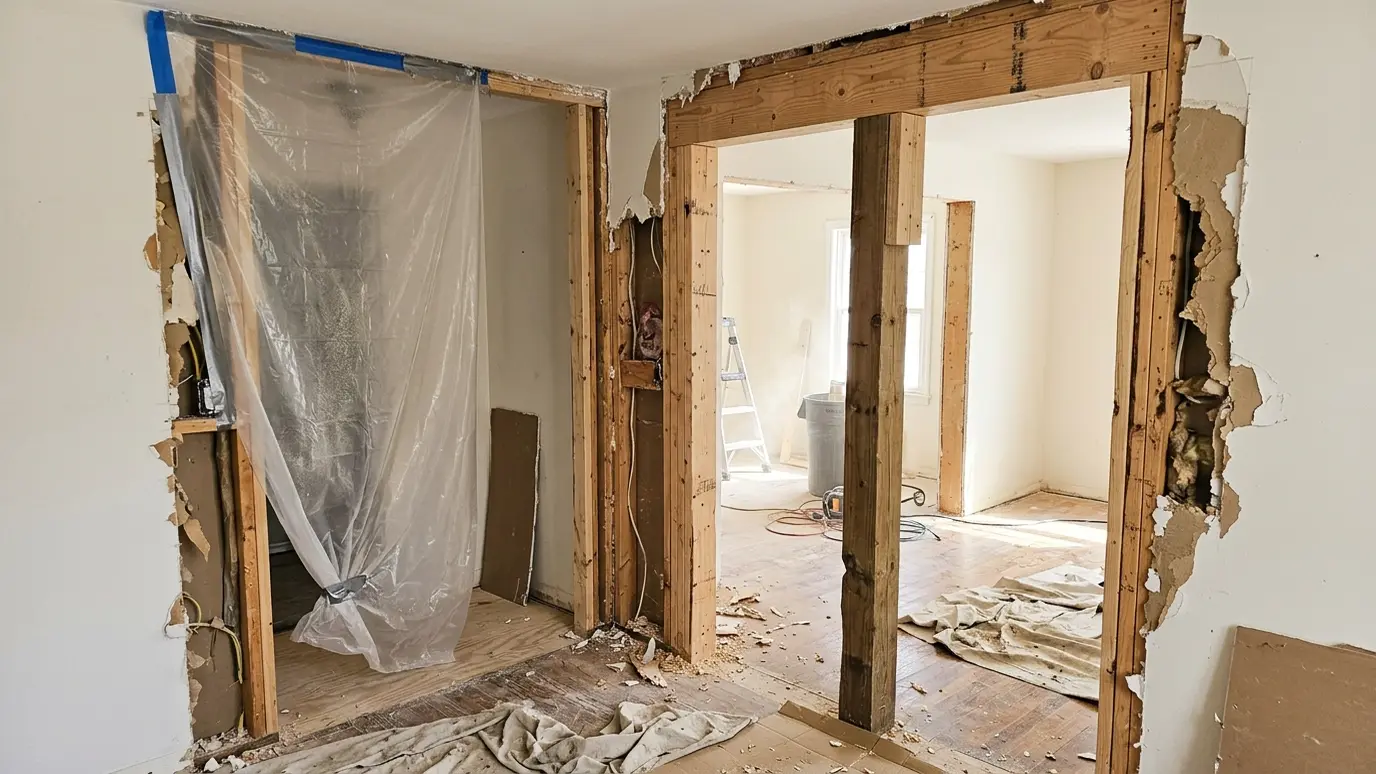 Wall and Opening DemolitionNon-load-bearing walls removed and new openings cut cleanly, with dust control and clean framing for an open, bright…Explore
Tell us about the project and we will call you back to talk it through.
Or call (615) 357-7797 to talk now.