Cleanup first
Nails, glass, wire and bits of concrete hide in the soil. Magnet sweeping and hand raking make the site safe for the next crew.
It is the step most often skipped.
Foundation and voids
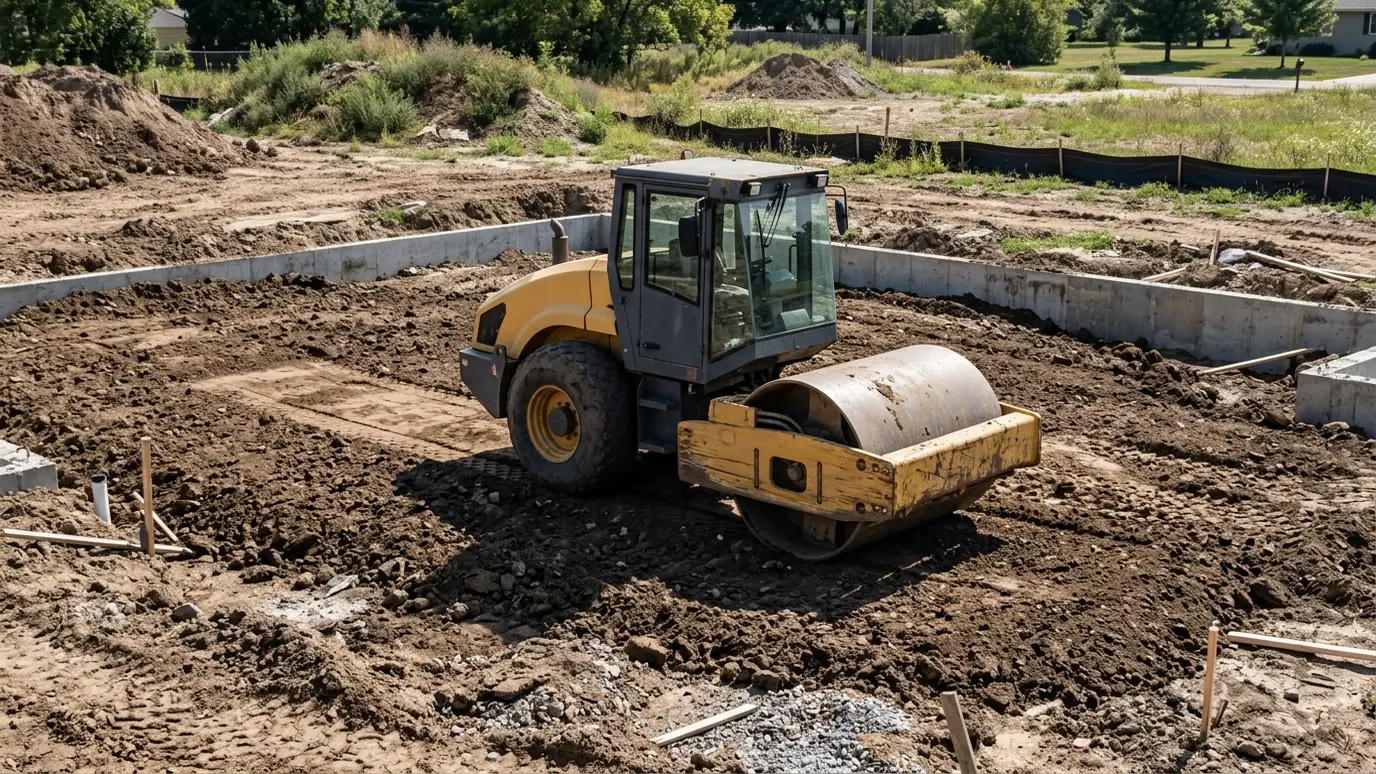
Old foundations, basements and pools leave voids that must be filled with suitable material in compacted layers.
Poor fill leads to settling.
Grading
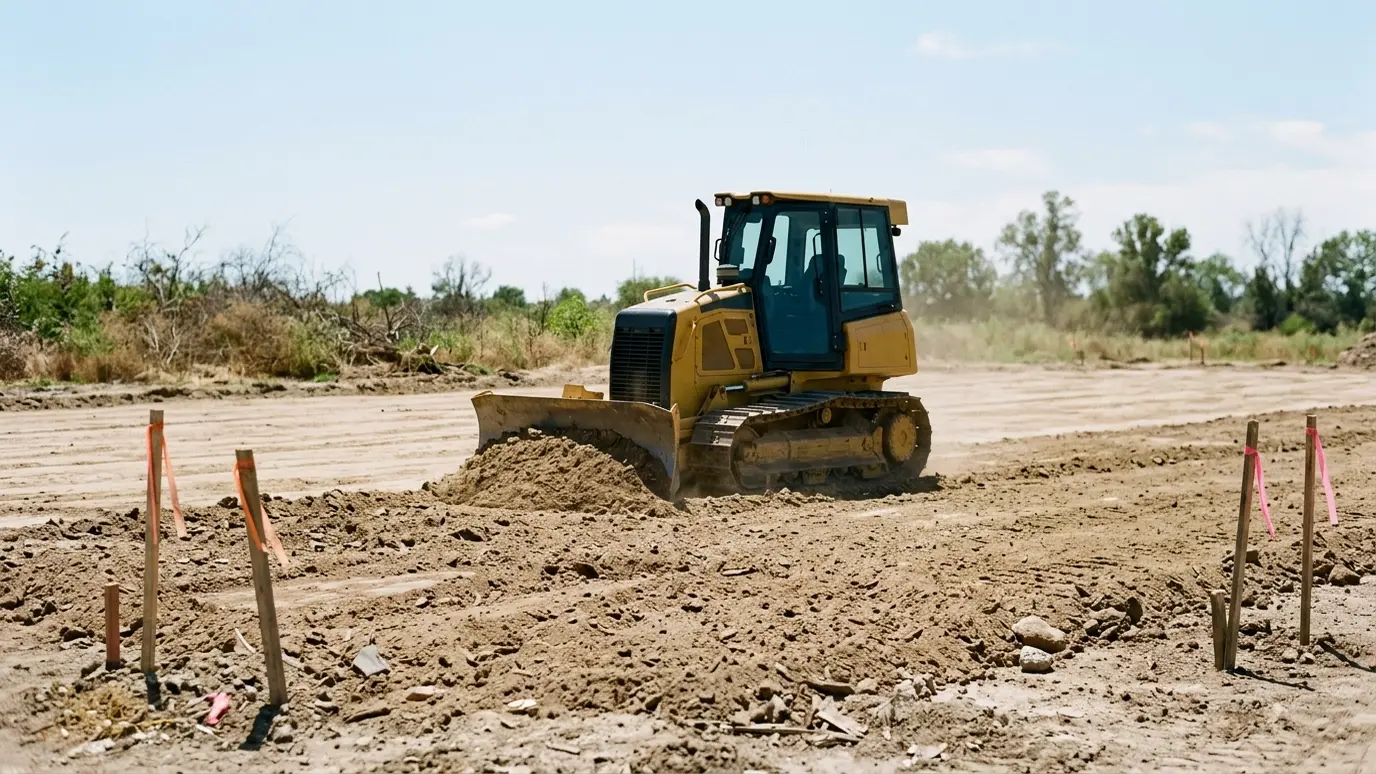
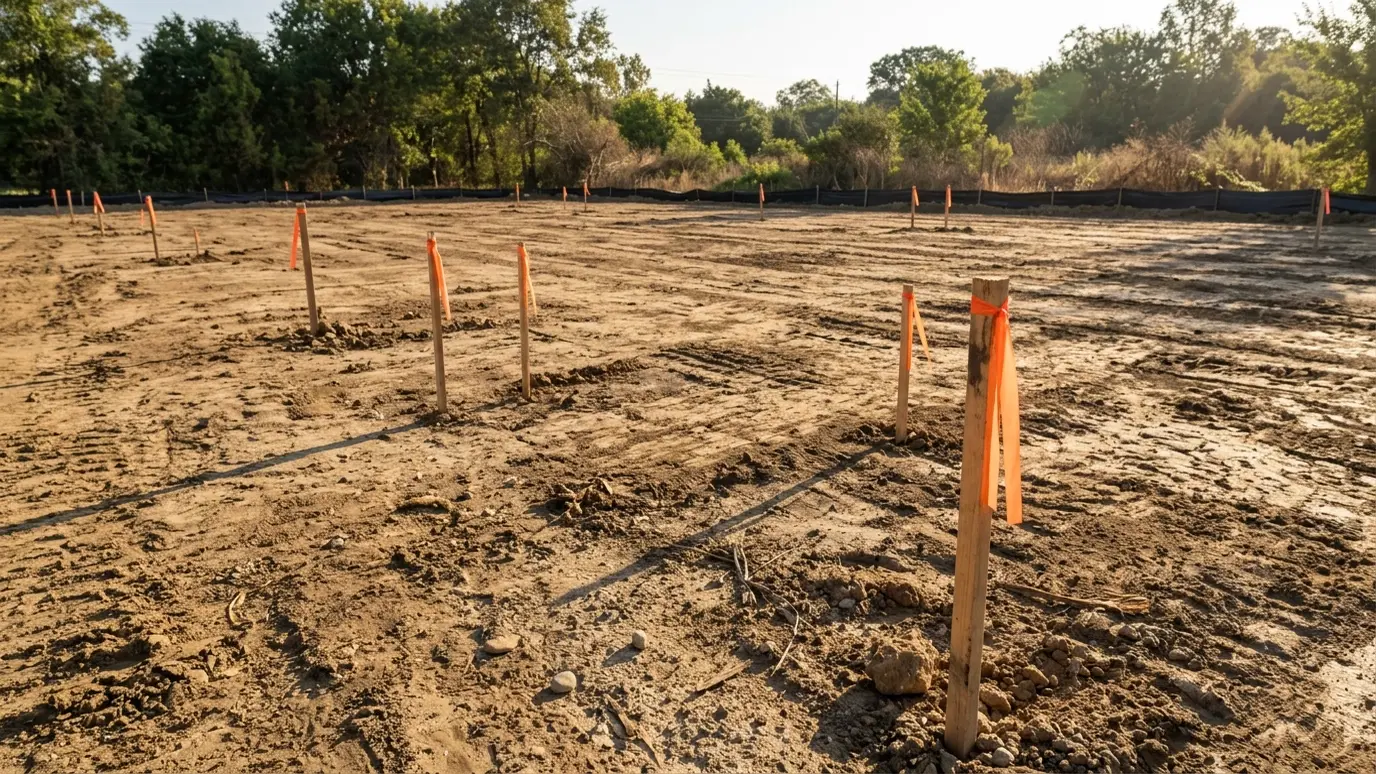
The lot is shaped to the plan so water drains away from the new structure. Builders and surveyors set the target elevations.
Ask for the final grade to be documented.
Erosion control
Bare soil washes away. Silt fence, wattles, stone entrances and seeding keep it on site and satisfy inspectors.
Maintain them until the new project stabilizes the ground.
Utilities for the new build
Water, sewer, electric and gas stubs may be needed. Coordinate with your builder and the providers.
Capped lines can often be reused.
Handing off to your builder
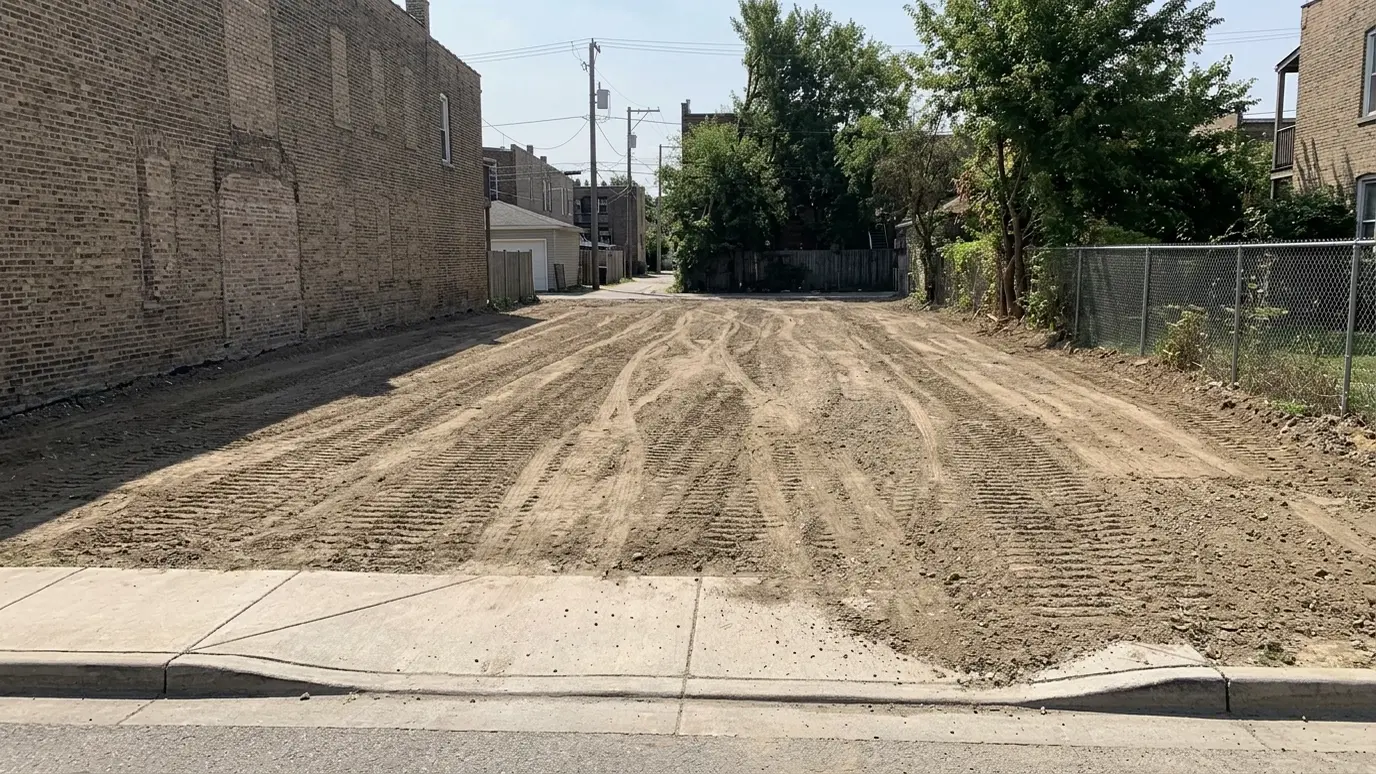
A walk-through with photos and a written list of what is in the ground helps the builder plan footings and utilities.
We provide both.
Treat site prep as part of demolition, and hand your builder a clean, graded, documented lot.