Why remove a pool
Maintenance costs, safety worries or a wish for more yard space all lead owners to remove pools.
Removal turns a liability into usable land.
Full removal
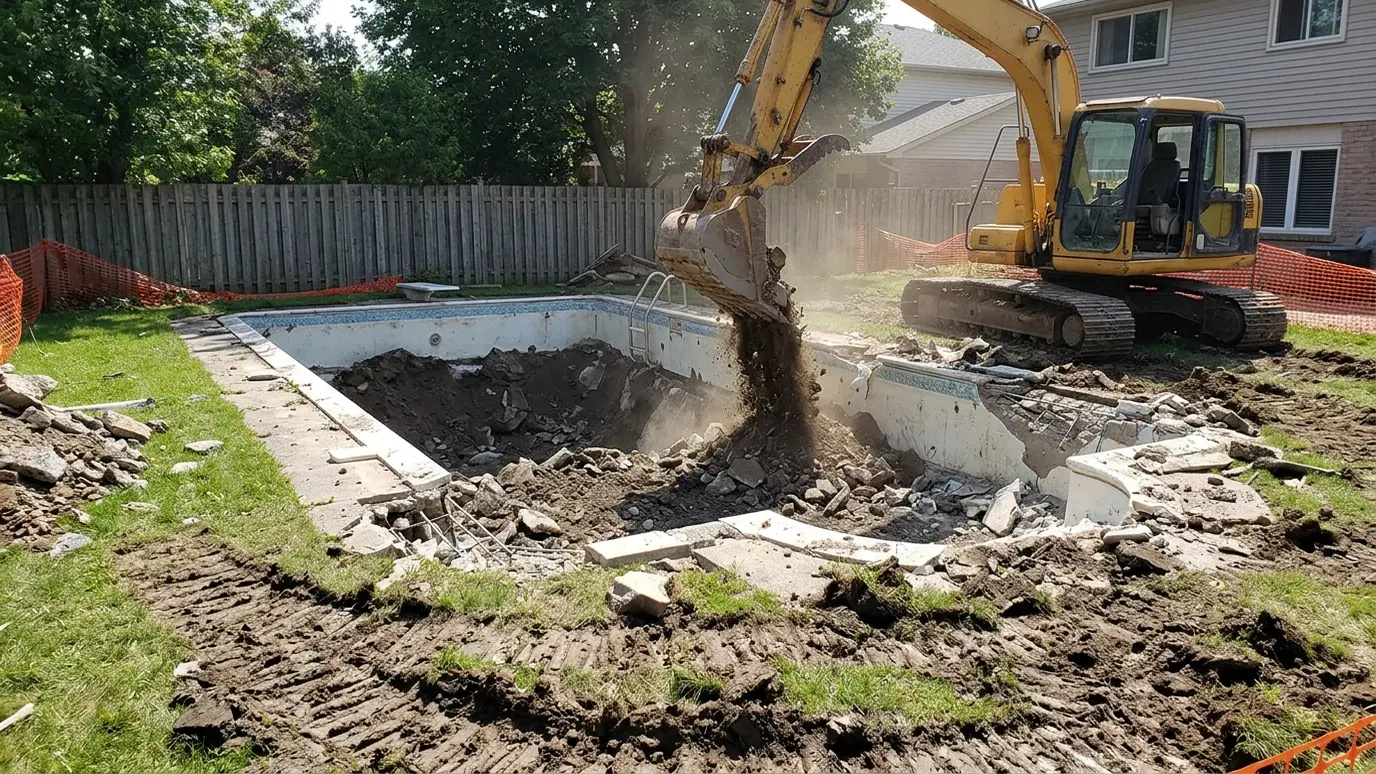
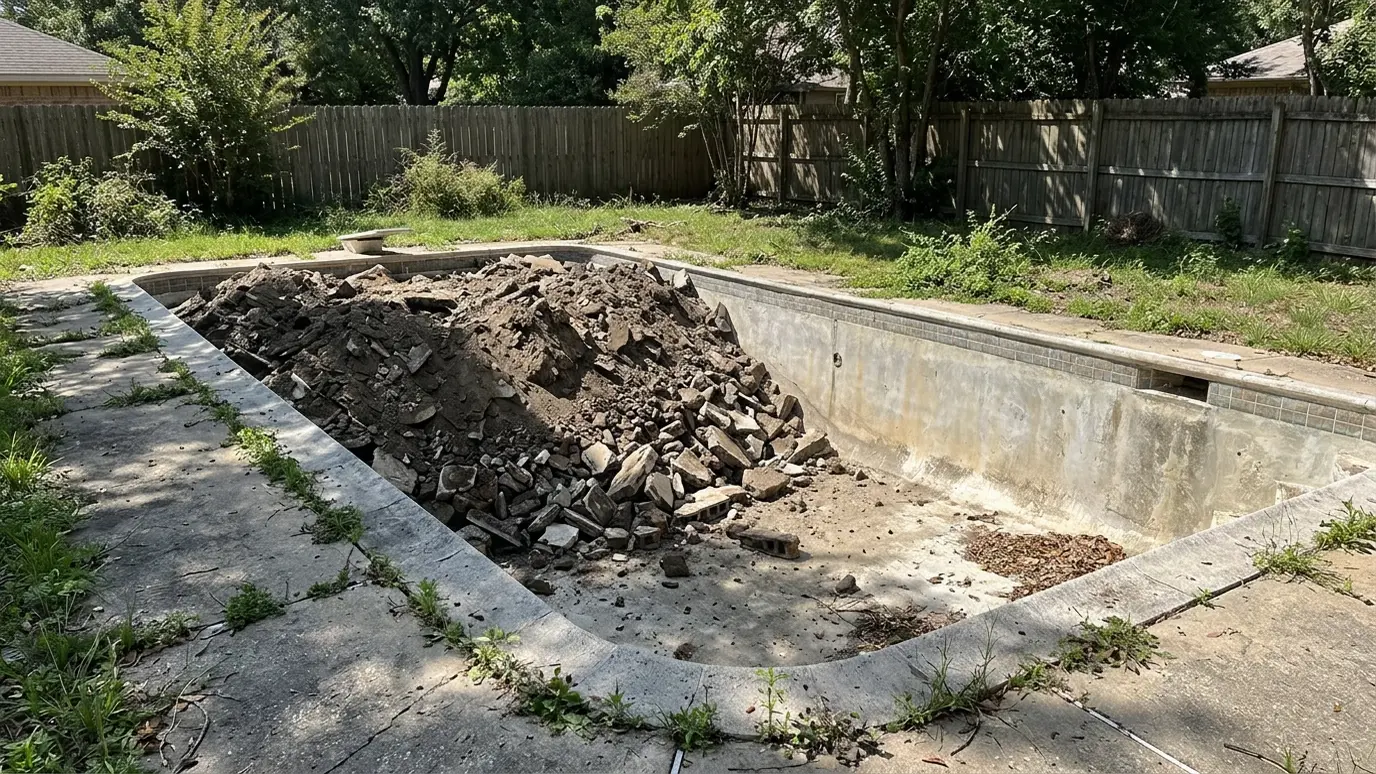
The entire shell is broken out and hauled, and the hole is filled and compacted. It leaves the cleanest result for future building.
It costs more than partial removal.
Partial removal
The bottom is broken for drainage, the upper walls are removed and the shell is filled in place. It is common for yards that will not hold a structure.
Local rules may require it be disclosed.
Draining and utilities
Water drains properly, and the pump, heater and electric are shut off and capped by the right trades.
Never drain a pool into a neighbor yard.
Fill and compaction
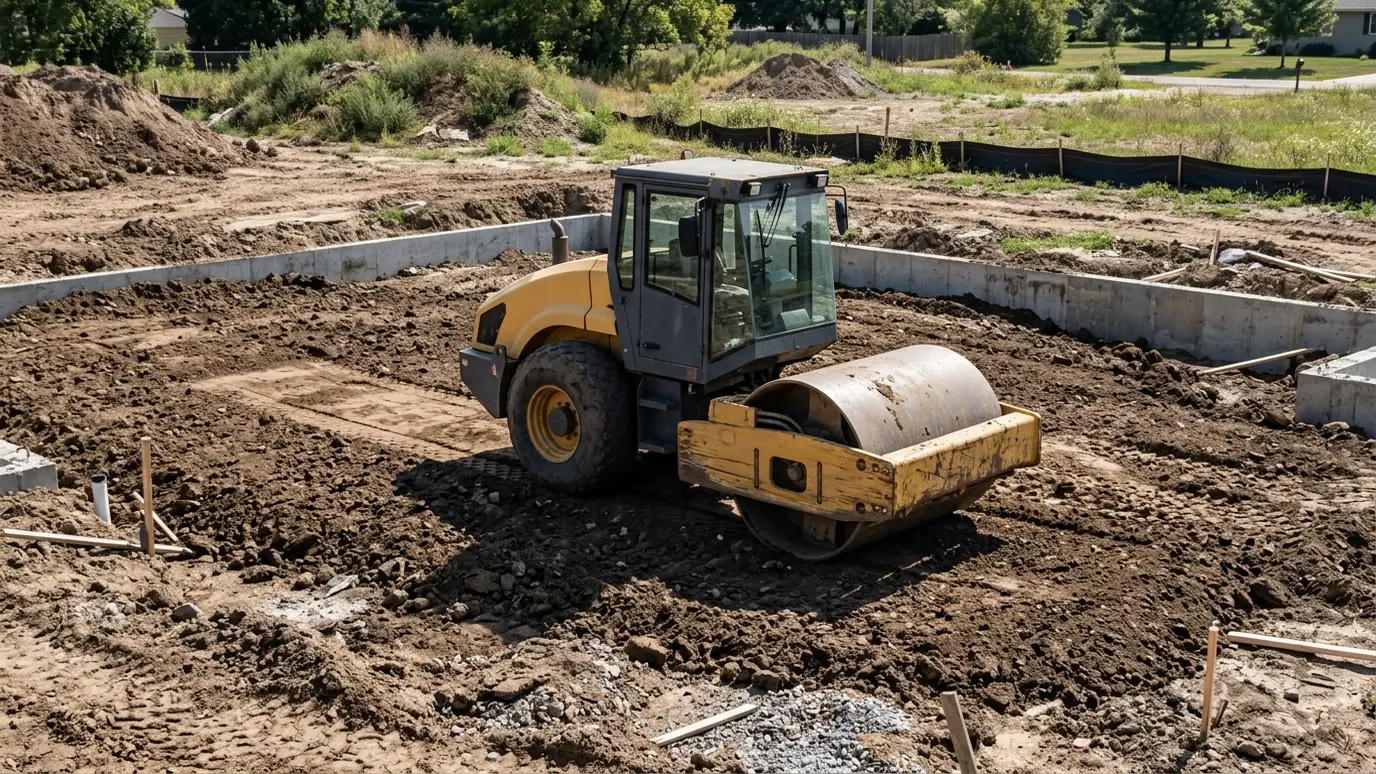
Clean fill placed in thin, compacted layers reduces settling. This is the key to a stable yard.
Ask how fill and compaction will be done.
Building over the area
Structures over a filled pool need engineering and testing. A patio may be fine, while a house addition is a bigger question.
Ask your builder before you plan.
Choose full or partial removal based on what you will build later, and insist on compacted fill.